Cowboys On My Mind

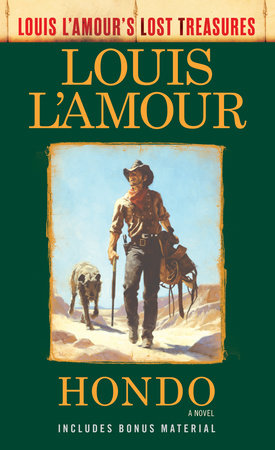
I don’t want to make the Pantsuit Politics Book Club my whole personality, but it strongly impacted my recent reading habits and so cowboys have been on my mind quite a bit lately. Over Christmas break I read Hondo by Louis L’Amour and All Things Left Wild by James Wade (both courtesy of my public library!) in preparation for the First Books Club: Westerns. I was already on board for this journey because I had recently completed a re-read of Louis L’Amour’s Sackett series. Mix into this the Pantsuit Politics slow read of Habits of the Heart (which I did not slow read, but completed just before listening to their conversations). Also, over Christmas break we introduced our son to Butch Cassidy and the Sundance Kid. And to put a bow on things I am currently reading Anna North’s Outlawed and re-reading Larry McMurtry’s Lonesome Dove (which along with the Sacketts is not my first re-read!). While you may think one of these things is not like the other, I have been thinking in particular about what Habits of the Heart says about pop culture and especially cowboys (see Taylor Sheridan’s preface to Lonesome Dove!) and all the ways cowboys continue to influence our lives. Maybe this is why I have revisited both the Sacketts and the Hat Creek Cattle Company over the years.
America is also the inventor of that most mythic individual hero, the cowboy, who again and again saves a society he can never completely fit into. The cowboy has a special talent–he can shoot straighter and faster than other men–and a special sense of justice. Habits of the Heart (p. 145)
I wonder how much of our modern conception of justice is based more on the vibes and mythology of the cowboy learned through movies? We can certainly trace our obsession with guns to this mythology.
The cowboy…can be valuable to society only because he is a completely autonomous individual who stands outside it. …The hero’s lonely quest for moral excellence ends in absolute nihilism. Habits of the Heart (p. 146)
Of course, this belief is the opposite of what Louis L’Amour writes. Over and over his lone cowboys seek out and find community and connection and many of their thoughts and conversations (when not focused on survival) contemplate the meaning and value of life — the exact opposite of nihilism. L’Amour’s cowboys want to be better men and leave the world a better place. Honestly, I think the world would be better if more men read L’Amour although I know my father did not take the same lessons from these texts as I do, but perhaps some of our arguments would have gone better if I’d been able to ground them in L’Amour texts.
The cowboy…began to appear as popular heroes when business corporations emerged as the focal institutions of American life. The fantasy of a lonely, but morally impeccable, hero corresponds to doubts about the integrity of the self in the context of modern bureaucratic organization. The irony of present-day middle-class American individualism derives from the fact that while a high degree of personal initiative, competence, and rationality are still demanded from individuals, the autonomy of the successful individual and even the meaning of “success” are increasingly in doubt. Habits of the Heart (p. 149-50)
Clearly the appeal of the cowboy to so many Americans is the dream of autonomy and shaping not only their own fate but the world around them. This appeal only increased as the corporate stranglehold on every aspect of American life rose. I suspect it is this dream of the modern-day cowboy that Taylor Sheridan has tapped into for his media empire.
Louis L’Amour’s Sackett series truly is the story of America told through the lens of one family seeking the American dream and I have always been obsessed with origin stories so that may be part of the appeal to me. I am pretty sure that is why I am more drawn to Taylor Sheridan’s prequel series (1883 and 1923) and have never actually watched Yellowstone.
There has always been something about the stories and landscapes of The West created by/for the cowboy that appeals to the American imagination. What cowboys and cowboy stories draw you in? What are your favorite westerns? Why do you think these stories continue to appeal to us? More: The Real History of the Cowboy And Why He Still Defines Americana?